The Rise of Micro-Entrepreneurs in the Creator Economy: How One Person Can Build a Global Business
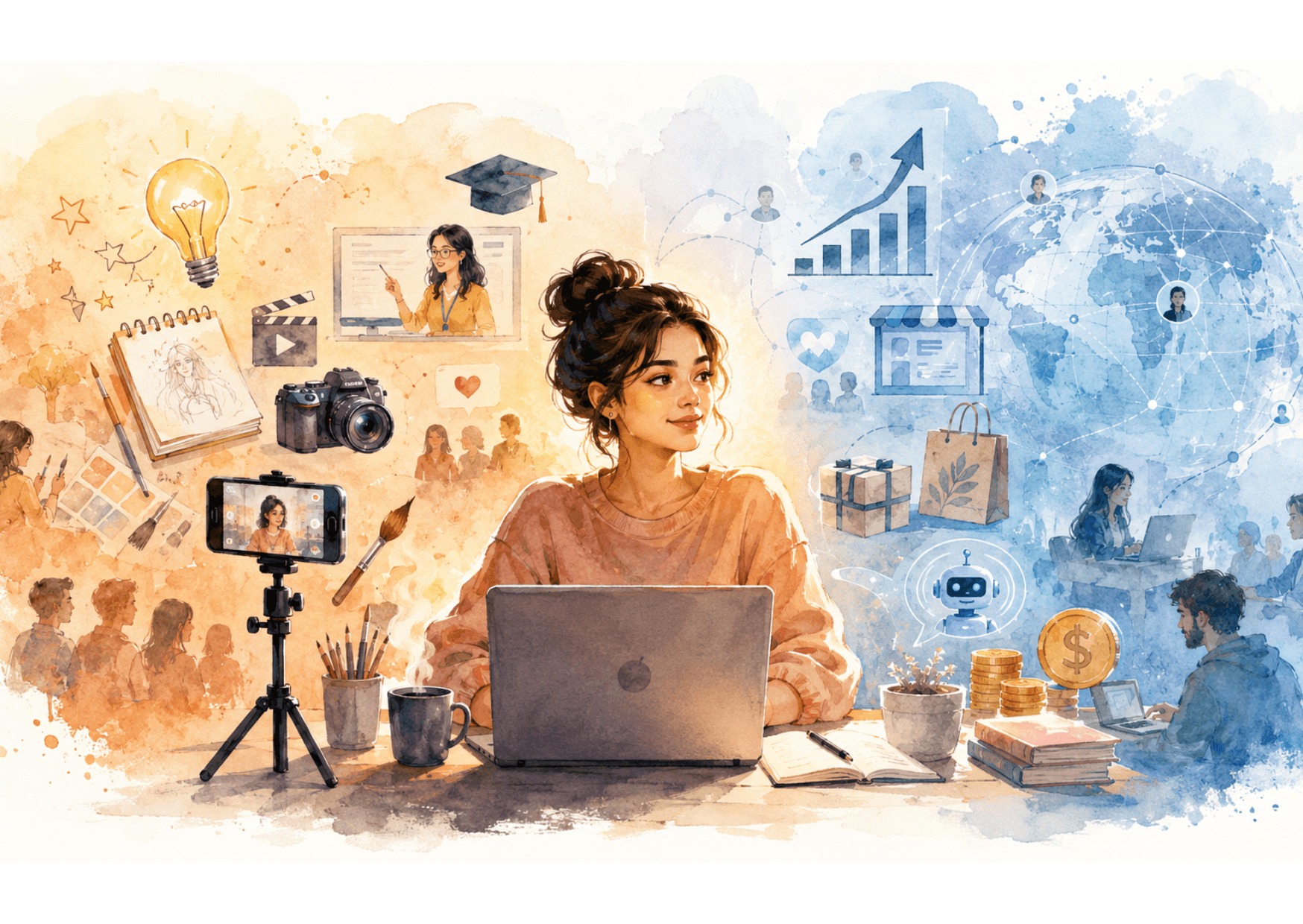
This blog explores how the creator economy empowers micro-entrepreneurs to build global businesses through creativity, personal branding, technology, and digital communities.
Imagine telling two decades back that a college student is earning more than a large company's CEO by making videos and content online or teaching online. It would have sounded unreal. Back then entrepreneurship meant having a physical store with proper large investments managing employees etc, and spending years to make an established business.
Now fast forwarding to 2026, the game is different.
Anyone with just smartphone ,internet connection and proper skills has the opportunity to build a business that reaches customers across the globe.This change has led to the birth of this new category called micro-entrepreneurs, basically people who can create a market and sell their products or services by themselves. Rather than opting for an orthodox old school way of business structures these entrepreneurs use their own creativity and authenticity taking the aid of technology to connect with the audiences directly.
This shift has created a creator economy , one of the fastest growing sectors in the modern business world. It has given a new definition to what entrepreneurship looks like and has made business ownership more accessible than ever before.
What Is a Micro-Entrepreneur?
A micro-entrepreneur is someone who manages business that are small scale often like on their own or with a very small team. It is little different from traditional entrepreneurs who may have proper offices, employees, or large investments, micro-entrepreneurs use digital tools to work efficiently and keep costs down. Most of the micro-entrepreneurs are like content creators, educators, designers, freelancers, consultants, artists, fitness coaches, or photographers. Some sell products online like courses, templates, e-books, and design assets. Others earn money through brand partnerships, subscriptions, affiliate marketing, memberships, or physical products. What sets this business model apart is that it is the individual that becomes the brand more than their actual product . Instead of promoting a company, they build trust through their personality, expertise, and consistent effort. hobby for many has turned into full-time businesses. Creators are not just collecting likes and followers; they are building brands that generate steady income.
The Growth of the Creator Economy
The creator economy is a space where individuals monetise themselves by creating content, building communities, and monetizing their skills online. Social media platforms like YouTube, Instagram, TikTok, LinkedIn, and podcasts increase their reach to millions of viewers and audiences without relying on television, newspapers, or publishing companies. Now, someone with valuable knowledge can teach coding, photography, cooking, finance, fitness, or almost any skill directly to people worldwide. What started as a Building a Business Through Personal Branding
One of the biggest reasons behind the success of micro-entrepreneurs is the importance of personal branding.
A personal brand is a lot more than just a logo or a profile picture. It is the persons reputation, values, expertise, and personality that people associate with an individual. When the audience s trust the create and have like relatability they tend to buy their products more than what they could usually get from somewhere else
Unlike traditional businesses that spend millions on advertising campaigns, micro-entrepreneurs often grow by consistently providing value. Educational videos, entertaining content, honest reviews, and practical advice help build long-term relationships with audiences.
Trust has become one of the most valuable forms of business capital. In today's digital economy, people often choose to follow people before they follow brands.
Real-Life Success Stories
Real life stories of success are really cool. One famous example is MrBeast. He started with a YouTube channel. It grew into lots of other things like snacks, clothes with his name on them helping people and big entertainment projects. This shows that if you keep making things for people to watch you can make a company that people all around the world know.
Another person who did something like this is Emma Chamberlain. She made videos about her life and people liked them because they were, like their lives. She did not just stop at making videos she used her videos to make people want to buy things from her like coffee. She also worked with fashion companies and made a name for herself that people know.
These people did not have a lot of money when they started. They made people trust them first then they made groups of people who liked what they did. After that they made things that these people really wanted to buy. What they did tells us something people who start companies today often get a lot of people to like them before they even make a company. They get people to like them. Then they make things for these people to buy. MrBeast and Emma Chamberlain are examples of this. They are people who made real companies from scratch.
Challenges Behind the Success
Becoming a micro-entrepreneur is really exciting.. It also comes with some tough challenges.
* Every day millions of creators are sharing content. So standing out requires you to be creative, post content and keep learning new things.
It is even harder to keep your audience interested. This is because trends and social media algorithms change fast.
Many micro-entrepreneurs feel burnt out. This is because they do everything by themselves. They create content market it support customers and manage finances.
Unlike jobs you do not get a steady income. This makes it hard to plan your finances.
Looking ahead artificial intelligence is going to change micro-entrepreneurship a lot.
Artificial intelligence can help you write, design graphics, edit videos, support customers, research markets and automate your business.
This means you can do more with less.
However artificial intelligence cannot replace your ideas, creativity, empathy or real human connections.
The successful micro-entrepreneurs will use these human qualities along, with artificial intelligence tools.
They will build innovative businesses. These businesses will be able to compete over the world.
Conclusion
The rise of micro-entrepreneurs has changed the way people start businesses. Now people can build a micro-entrepreneur business with just a few good ideas, a computer and a lot of hard work. They do not need a lot of money to start a -entrepreneur business. To be a micro-entrepreneur they need to keep trying every day and not give up.
The internet and computers have made it easy for micro-entrepreneurs to start a business.
For a micro-entrepreneur to be successful they need to be honest and make things that people really need. This is how micro-entrepreneurs can turn the things they love into a -entrepreneur business that will last.