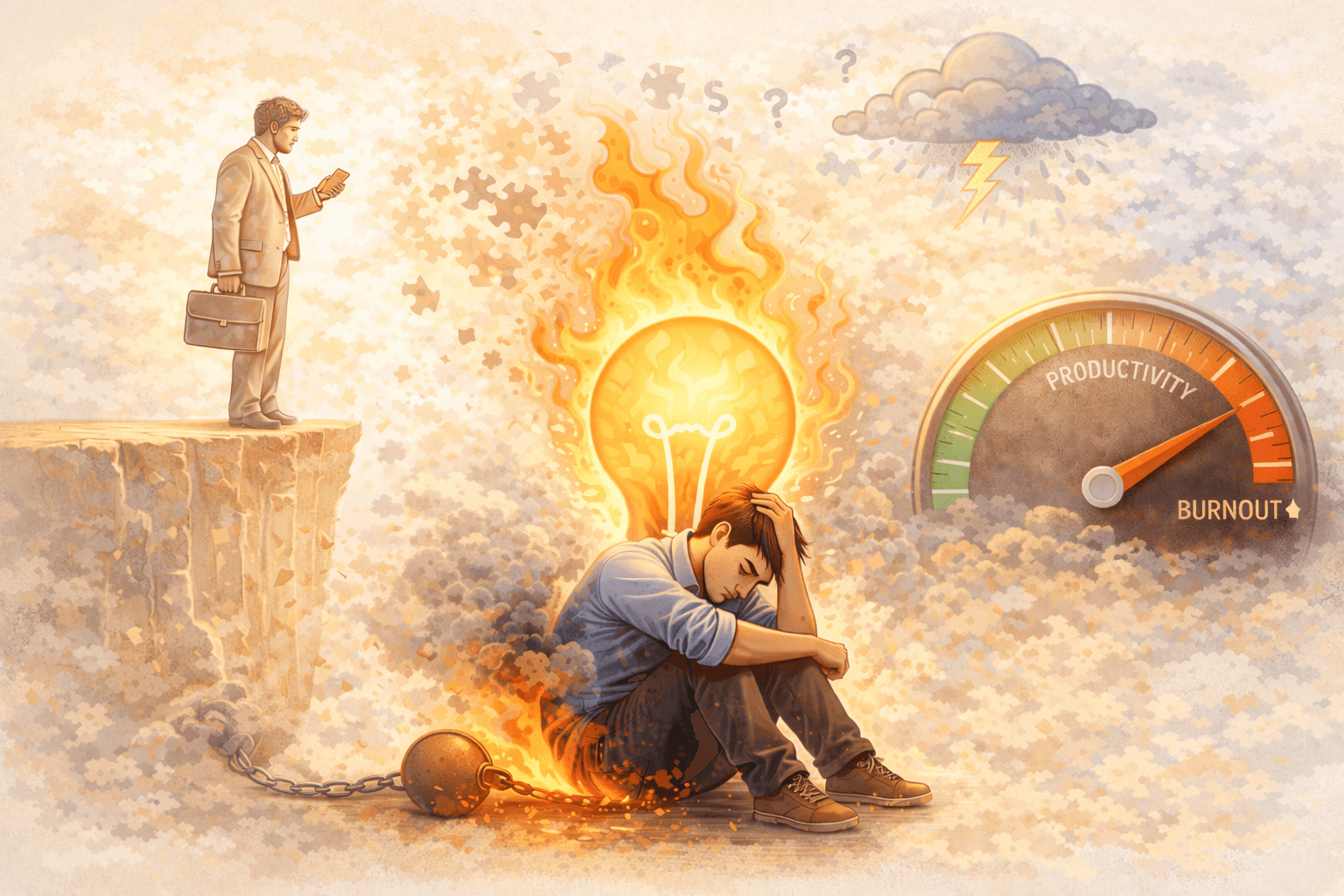
Burnout in entrepreneurship is a risk to the long-term success of a startup that is often overlooked.
Burnout in entrepreneurship is a hidden business risk that harms decision-making, leadership, and growth. Sustainable habits are essential for long-term success.

What does it mean to "burn out"?
Sometimes life goes from "I can handle this" to "I don't even know who I am anymore." In the workplace, people often say this change is only temporary tiredness or weakness. It is very close to what doctors call "burn-out."
Long-term stress at work that hasn't been handled appropriately might lead to burn-out. It is characterized by fatigue, skepticism, and diminished efficacy. The World Health Organization notes that Burn-out is a work-related problem that is included in the 11th Revision of the International Classification of Diseases (ICD-11). People don't think of it as a medical problem.
People usually think of burnouts as personal problems instead of a threat to the whole system, even though this difference is crucial. People don't often realize how much it influences the quality of leadership, decision-making, and the long-term success of the company.
Why is it more likely that entrepreneurs will fail?
Burnout in entrepreneurs can happen for more than just a heavy workload. It frequently arises from the mental and physical challenges that come with becoming an entrepreneur.
One example of this is when you mix your personal life with your job results. Studies that distinguish between harmonious and obsessive enthusiasm reveal that entrepreneurs motivated mostly by external rewards—such as financial recognition or status—exhibit a greater vulnerability to burnout. When you evaluate your worth by your accomplishments, failing hurts more and it's difficult to stay detached.
It's more likely that you'll burn out if you have too many roles. At first, business entrepreneurs generally have to do a lot of tasks at once. At first, this level of participation may be necessary, but as the business expands, not wanting to delegate can lead to cognitive overload and decision fatigue, which can hurt both leadership effectiveness and personal sustainability.
If entrepreneurs are away from work that matters for a long period, they could also feel burned out. When companies grow, the people who started them sometimes stop coming up with fresh ideas and plans and just keep doing the same things over and over. This lack of stimulation, which is also known as "boreout," can make you feel tired and agitated, just like working too much might.
Last but not least, a lot of business owners don't have backup plans in case something goes wrong. Stress from home can easily disrupt your work life when there are no set hours and you have to worry about money and your own results. When things get tough, trying to work more to make up for it usually just makes you more weary instead than less fatigued.
The Risk of Burnout for Business
People often think of burnout as a health condition, but in business, it may directly effect how well the business does. When a founder is emotionally and mentally tired, it's harder for them to make decisions, respond quickly, and accurately estimate risk. When strategic judgement gets worse, it affects the whole company, from recruiting decisions to changes in the market.
Leaders are especially at risk. People who are burned out may be irritated, uninterested, or talk in a way that isn't clear, all of which hurt team trust and morale. These changes can have a tremendous impact on companies that are just starting out since the way executives act has a big impact on the company's culture. Teams that don't know what they want to do or are emotionally unstable are more likely to fight, botch up, and leave.
Burnout also makes things riskier. When founders are tired, they are less likely to make hard choices, restructure when it's necessary, or stick with plans that aren't working because their minds aren't as flexible. This could imply missed chances, squandered resources, and losing your edge over the competition over time. In the worst cases, burnout can cause sudden shutdowns or the founder to leave, which means that businesses don't have any strategic continuity.
So, burnout isn't only a problem for you; it's a problem for everyone. Its effects are part of the work's quality, the stability of the leadership, and the long-term success. If you only think about burnout as a personal problem, you don't understand that it could be a risk factor that slowly brings down businesses that are doing well.
Hustle culture and how burnout has become normal
When you live in a "hustle" culture, it's hard to see burnout as a danger to your business. People often remark that business owners that are successful work long hours, are always available, and give up things for their firm. This supports the idea that commitment and endurance are the same thing. This framing makes exhaustion seem normal and stops people from thinking about how to make things last.
Survivorship bias shapes these kinds of stories. People who left too soon because they were weary or sick aren't generally in stories about outstanding businesspeople. Because of this, people see burnout as a temporary weakness rather than a regular result of working too hard for too long. Even though stress can make cognitive function worse over time, productivity is based on how much work is done, not how good the work is.
Hustle culture encourages intensity over consistency, which means you earn short-term benefits but undermine your long-term success. This way, it stops thinking of burnout as a sign of trouble and starts to consider it as a normal part of running a business.
Changing Sustainability into a Plan
We shouldn't think of sustainability in business as taking care of ourselves; instead, we should think of it as making smart choices about risks. People can make decisions that are in accordance with one other, leaders can stay in charge, and projects can be finished throughout time when they employ sustainable work methods. You may safeguard your mental and emotional health by taking pauses, delegating responsibilities, and setting limitations. These things don't mean you don't want to achieve.
From a business point of view, sustainability makes things more stable. Founders that are openminded can better handle changes in the market, uncertainty, and leadership well when things aren't solid. Entrepreneurs can make their firms stronger and minimize the risk of burnout by making sustainability a part of how they operate their businesses and lead their staff.
Final Thoughts
A lot of people assume that burnout in entrepreneurship is a personal problem, but it's really a problem with the system that arises from how firms are set up and how people want entrepreneurs to act. If you don't take care of it, it will affect your business, your capacity to make judgments, and your leadership qualities over time. If we conceive of burnout as a business risk that focuses on endurance over intensity, we might be able to better comprehend sustainability as a business risk. In a world that is continuously changing, it may be more necessary to keep things clear and do them than to always go after them.